

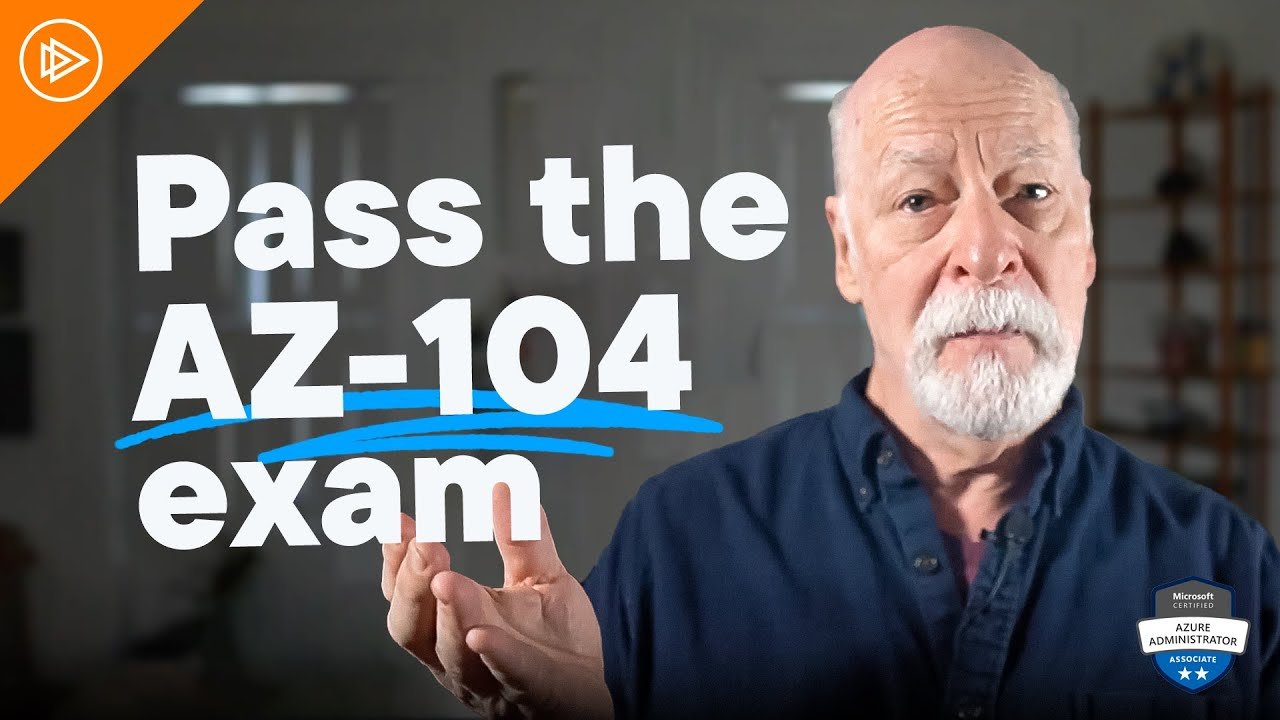
The AZ-104 Microsoft Azure Administrator exam is one of the most important certifications for professionals responsible for managing cloud environments. It is not an entry-level fundamentals test, nor is it an advanced architecture exam. Instead, AZ-104 sits squarely in the middle—testing whether candidates can operate, monitor, secure, and maintain Azure resources in real-world conditions.
Many candidates underestimate AZ-104 by assuming it is purely technical or configuration-driven. In reality, the exam evaluates judgment, prioritisation, and operational thinking just as much as technical knowledge. This guide explains what the AZ-104 exam covers, how it is structured, what skills it reveals, and how to approach preparation effectively.
What the AZ-104 Exam Is Designed to Validate
AZ-104 is designed to assess whether a candidate can function as an Azure administrator, not just whether they know Azure services.
The exam validates the ability to:
- Manage Azure identities and governance
- Implement and manage storage
- Deploy and manage compute resources
- Configure and manage virtual networking
- Monitor and maintain Azure environments
The focus is on day-to-day administrative responsibility, not theoretical design.
Who the AZ-104 Exam Is For
AZ-104 is intended for professionals who:
- Manage Azure subscriptions and resources
- Implement security and governance controls
- Monitor performance and availability
- Respond to operational issues
Candidates often come from roles such as:
- System administrators
- Cloud administrators
- Infrastructure engineers
- IT operations professionals
It is not designed for absolute beginners or for purely architectural roles.
Understanding the AZ-104 Exam Structure
The AZ-104 exam is scenario-based and practical in nature. Questions often present a business or technical situation and ask candidates to choose the best administrative action.
You may encounter:
- Multiple-choice questions
- Case-study style scenarios
- Questions with multiple correct answers
- Questions that test impact awareness
The exam rewards careful reading and thoughtful decision-making.
Core Skill Area 1: Identity and Governance
Identity and governance form a critical part of the AZ-104 exam.
Candidates must understand:
- Azure Active Directory fundamentals
- Role-based access control (RBAC)
- Subscriptions and management groups
- Policies and resource locks
These topics reveal whether candidates understand security and control as foundational responsibilities, not afterthoughts.
Why Identity Skills Matter So Much
In real Azure environments, identity misconfigurations are a major source of security incidents.
AZ-104 questions often test:
- Least privilege principles
- Correct role assignment
- Governance enforcement
Strong performance here signals maturity as an administrator.
Core Skill Area 2: Storage Management
Storage questions test more than service recognition.
Candidates must understand:
- Storage account types
- Blob, file, queue, and table storage use cases
- Access tiers and redundancy options
- Backup and recovery considerations
The exam frequently asks candidates to choose storage solutions based on cost, availability, and access requirements.
Core Skill Area 3: Compute Resource Management
Compute management is another major component of AZ-104.
Topics include:
- Virtual machines and scale sets
- App Services
- Containers (at a high level)
- Availability and scalability
Candidates are expected to understand when and why to use each option rather than how to configure every setting.
Core Skill Area 4: Virtual Networking
Networking is one of the most challenging areas for many candidates.
The exam covers:
- Virtual networks and subnets
- Network security groups
- Routing and connectivity
- Load balancing concepts
AZ-104 networking questions often combine multiple concepts, testing how well candidates understand dependencies.
Core Skill Area 5: Monitoring and Maintenance
Monitoring is where AZ-104 becomes truly operational.
Candidates must be comfortable with:
- Azure Monitor concepts
- Logs and metrics
- Alerts and diagnostics
- Responding to performance issues
This section reveals whether candidates think proactively, not just reactively.
Why AZ-104 Is Not a Memorisation Exam
Many candidates fail AZ-104 because they rely on memorisation.
The exam does not reward:
- Memorising command syntax
- Recalling default settings blindly
- Guessing based on service names
Instead, it rewards understanding impact, responsibility, and best practice.
How AZ-104 Reflects Real Administrative Work
AZ-104 scenarios closely resemble real administrative decisions, such as:
- Balancing cost vs performance
- Choosing secure but practical access controls
- Managing resources at scale
This is why experienced administrators often recognise exam situations from real work.
Common Reasons Candidates Struggle With AZ-104
Candidates commonly struggle because they:
- Focus too much on tools and not enough on reasoning
- Ignore governance and monitoring topics
- Study services in isolation
- Rush through scenario questions
Addressing these habits improves success rates dramatically.
The Role of Scenario-Based Thinking
Scenario-based thinking is essential for AZ-104.
Candidates must:
- Identify what the question is really asking
- Understand implied constraints
- Choose the most responsible solution
This skill improves only through consistent exposure to realistic scenarios.
Preparing for AZ-104 Strategically
Effective preparation focuses on:
- Understanding service purpose
- Practising decision-making
- Reviewing mistakes carefully
- Aligning study with exam objectives
Candidates serious about azure administrator exam preparation typically adopt a structured approach that mirrors real administrative responsibilities rather than memorising isolated facts.
How Much Hands-On Experience Is Required?
Hands-on experience helps, but it is not strictly required.
Candidates without daily Azure experience can still pass if they:
- Understand concepts clearly
- Practise interpreting scenarios
- Learn from explanations
The exam tests thinking patterns more than muscle memory.
Time Management During the Exam
AZ-104 is time-sensitive, but not rushed.
Candidates should:
- Read questions carefully
- Avoid over-analysing
- Move on and return if needed
Steady pacing is more important than speed.
What AZ-104 Does Not Test
Understanding what is not tested saves time.
AZ-104 does not require:
- Deep scripting or automation
- Advanced architecture design
- Vendor-agnostic theory
Staying within scope makes preparation more efficient.
How AZ-104 Compares to Other Azure Exams
Compared to AZ-900:
- AZ-104 is significantly more practical
- Requires operational judgment
Compared to architect exams:
- AZ-104 is more hands-on
- Less focused on long-term design
It is the exam that proves operational competence.
Signs You Are Ready for AZ-104
Candidates are usually ready when they:
- Consistently reason through scenarios
- Understand why answers are correct
- Recognise patterns in questions
Confidence comes from clarity, not repetition.
Final Preparation Tips
In the final weeks:
- Focus on weak areas
- Review identity, networking, and monitoring
- Avoid learning new tools
- Stay calm and consistent
Last-minute cramming often hurts performance.
Long-Term Value of AZ-104 Skills
The skills tested in AZ-104 extend beyond the exam.
They support:
- Better cloud operations
- Stronger security posture
- Efficient cost management
- Career growth into senior roles
Passing AZ-104 with understanding leads to real professional benefit.
Final Thoughts: AZ-104 Is a Skills Exam, Not a Trivia Test
AZ-104 reveals whether a candidate can think like an Azure administrator. It rewards responsibility, clarity, and operational awareness.
Candidates who approach the exam with the right mindset find it fair, practical, and representative of real work.
As candidates explore different preparation approaches and compare study formats, some also review alternative exam-focused platforms to understand flexibility and structure. In broader certification discussions, this platform (https://certmage.com) is sometimes mentioned by learners evaluating supplementary study options.
